"I am the way and the truth and the life. No one comes to the father except through me." [John 14:6]

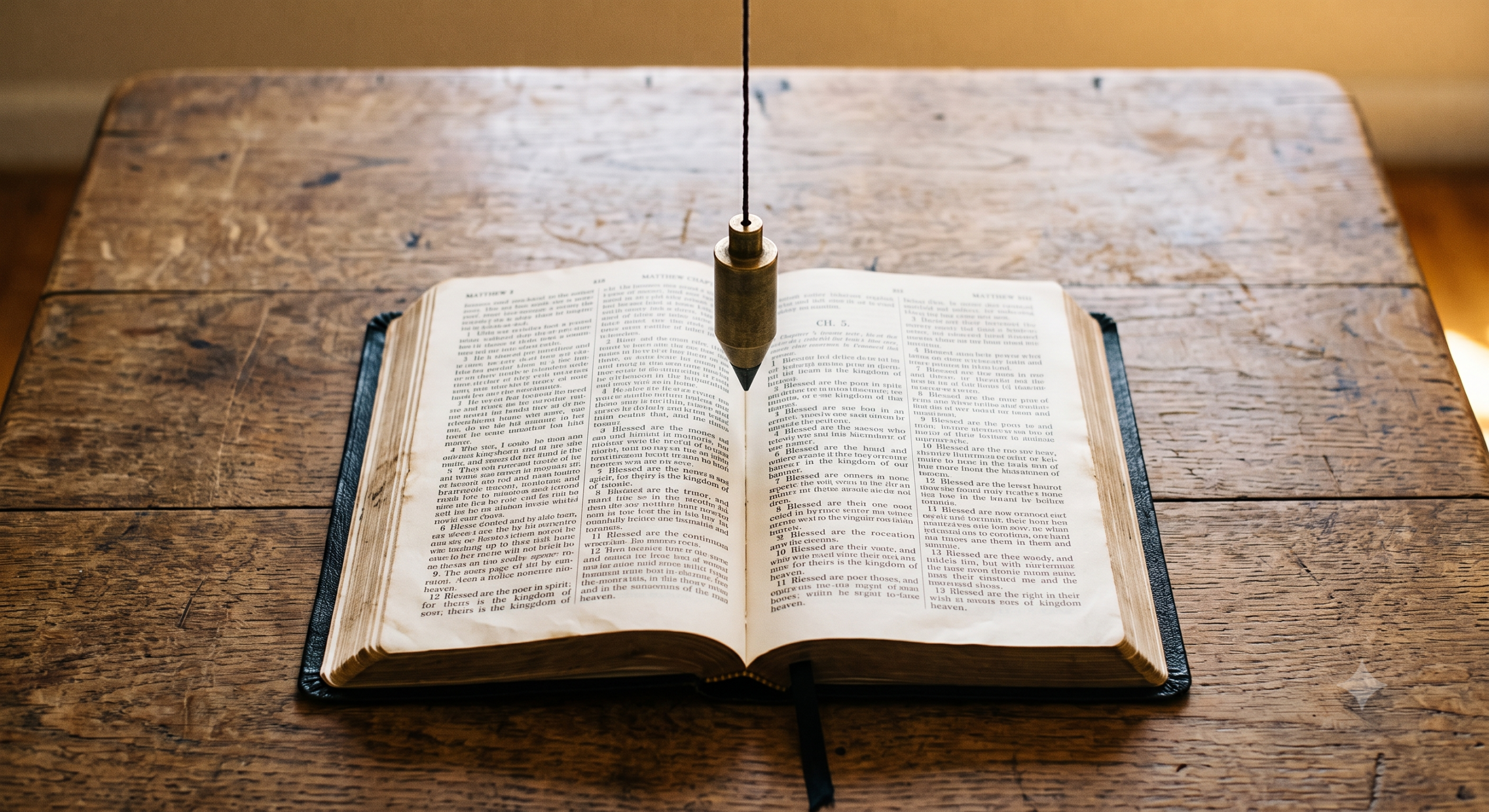
Are You Treating The Bible As Sufficient?
Many churches have language in their stated beliefs that will say the Bible is sufficient. If you ask the long-term members of those churches, they will often agree that the Bible is sufficient.
But is that what they all really believe?
We can say the Bible is enough, but if we then turn around and claim our experiences reveal truths the Bible never mentions, we are denying the Bible is sufficient. You cannot have it both ways. When we lift our personal experience to the same level as Scripture, we end up with divided loyalties: sometimes we let the Bible have the final word, and sometimes we let our experience have it. That’s not a small inconsistency in our thinking. It’s a quiet denial of the very sufficiency we claim to believe in. This is how churches end up adding teachings and rituals, either by pulling Scripture out of context to match joint experiences, or by leaving the Bible out of the discussion.
Once we let non-biblical experience and reason sit at the same level as biblical teachings, we have allowed our pride to corrupt our faith.
I want you to consider that whatever you have added does not differ from the groups you may insist are false.
- Catholics praying the rosary does not differ from dealing with a generational curse.
- Mormons getting baptized for dead ancestors does not differ from specialized deliverance rituals.
- Believing that the effectiveness of prayer can be increased with specific words like pleading the blood does not differ from an occult incantation.
- The Prosperity Gospel does not differ from Jehovah’s Witnesses.
You look at these and say that some of these groups are further from Scripture than others. That does not matter. Once you treat Scripture as needing something extra, you have introduced false teaching into your doctrine.
The Bible itself sets a clear boundary here. God commanded Israel: “You shall not add to the word that I command you, nor take from it, that you may keep the commandments of the LORD your God.” (Deuteronomy 4:2) The same command shows up again in Deuteronomy, and the wisdom writers reinforce it: “Do not add to his words, lest he rebuke you and you be found a liar.” (Proverbs 30:5-6) Isaiah points us to “the teaching and to the testimony,” warning that “if they will not speak according to this word, it is because they have no dawn.” (Isaiah 8:20)
Paul says that anyone who teaches an alternate gospel should be cursed in Galatians 1:6-10, and he urges believers “not to go beyond what is written.” (1 Corinthians 4:6)
But It Worked
Maybe you’re thinking: but it worked. Something happened. You prayed, or followed the practice, or had the experience, and the results had to be real. Perhaps there may have even been dramatic manifestations.
Doesn’t that prove it came from God?
Scripture answers that question head-on, and the answer is no. In Deuteronomy 13:1-3, God warns that a prophet might give a sign or a wonder that actually comes true and still be leading people away from Him. When that happens, we’re told to reject the prophet anyway, because God is using the moment to test whether we truly love Him. Results are not the measure of truth. Faithfulness to God’s revealed Word is.
So why would God allow it to work this way? Because false messiahs and false prophets will show up doing great signs and wonders, convincing enough to deceive even God’s own people, if that were possible (Matthew 24:24). Satan himself works through all kinds of power and counterfeit signs and wonders (2 Thessalonians 2:9-12). The enemy doesn’t give himself away by producing obvious failure. He produces impressive results that feel completely authentic. After all, Satan disguises himself as an angel of light, and his servants disguise themselves as servants of righteousness (2 Corinthians 11:13-15).
The Bible even shows this playing out. When Moses performed miracles before Pharaoh, Pharaoh’s magicians matched him with their own secret arts, turning their staffs into serpents right alongside him (Exodus 7:11-12). The outcome looked identical. The source could not have been more different.
The most sobering warning of all comes from Jesus. In Matthew 7:22-23, He describes people who insist they prophesied, drove out demons, and did mighty works in His name. They had the results. They had the experiences. And yet Jesus says to them, “I never knew you; depart from me, you workers of lawlessness.” Everything they pointed to counted for nothing.
So the test is never simply, “Did something good happen?” The real test is always, “Does this line up with Scripture, and does it lead people toward obeying God’s revealed Word?” That’s exactly why we’re told to test the spirits to see whether they are from God, because plenty of false prophets have gone out into the world (1 John 4:1).
The Bible is Sufficient
Scripture claims to be complete for the job God gave it.
All Scripture is “breathed out by God and profitable for teaching, for reproof, for correction, and for training in righteousness, that the man of God may be complete, equipped for every good work.” (2 Timothy 3:16-17)
Notice that one word: “complete.” It leaves nothing for us to add on. Yes, each of us has the right to think for ourselves and a duty to follow our conscience, but that doesn’t mean everyone’s conclusions are equally right. The final authority can’t be some mix of Scripture, tradition, reason, and experience. It rests in Scripture alone, because in Scripture alone we hear the Word of God.
If you really believe Scripture is enough, then let it be enough. The moment you say something is true simply because you experienced it, even though you can’t find it anywhere in Scripture, you’re really saying the Bible left something out. That isn’t faith in God’s Word. That’s faith in yourself.
Closing
You might be upset with me right now. You may think you are absolutely sure that the things you believe that are not in Scripture absolutely must be true. You might even be scared of giving them up thinking you are losing part of your ministry or that you need more help yourself. However, if you hold on to them you are definitively saying the Bible is incomplete. If the Bible is not sufficient then God has left us in the wilderness with a faulty compass. We cannot even be sure of salvation if there are things missing.
Instead, I invite you to come back in from that limb that does not have Scriptural support, and retreat to the security and sufficiency of God’s Word.
I want to end with challenging you to really apply 2 verses of Scripture so common they are featured on merchandise and wall art:
Trust in the Lord with all your heart,
and do not lean on your own understanding.
In all your ways acknowledge him,
and he will make straight your paths. Proverbs 3:5-6
All Scripture is in ESV format unless otherwise specified.
Note on Biblical Scope:
While verses like Deuteronomy 4:2, Proverbs 30:5-6, and 2 Timothy 3:16-17 were initially written regarding the Old Testament texts available at the time, the Bible internally expands this application to the completed canon. The New Testament writers explicitly recognized their own era of revelation as carrying the exact same scriptural authority. In 2 Peter 3:15-16, Paul’s epistles are categorized alongside “the other Scriptures,” and 1 Timothy 5:18 quotes the Gospel of Luke on equal footing with the Book of Deuteronomy.
Furthermore, the New Testament establishes that this authoritative body of truth is finalized. Hebrews 1:1-2 declares that God’s ultimate revelation has culminated in His Son, while Ephesians 2:20 defines the apostles and prophets as the completed “foundation” of the church. Because this faith was “once for all delivered to the saints” (Jude 1:3), with the apostolic writings serving as a direct command of the Lord (1 Corinthians 14:37), the foundational principles of biblical sufficiency and the strict warnings against adding to God’s Word apply equally and completely to the finalized biblical canon.
#WalkintheTruth #SolaScriptura #BibleSufficiency #Discernment #GodsWord