"I am the way and the truth and the life. No one comes to the father except through me." [John 14:6]

What the Bible Says about the Danger of Doomscrolling
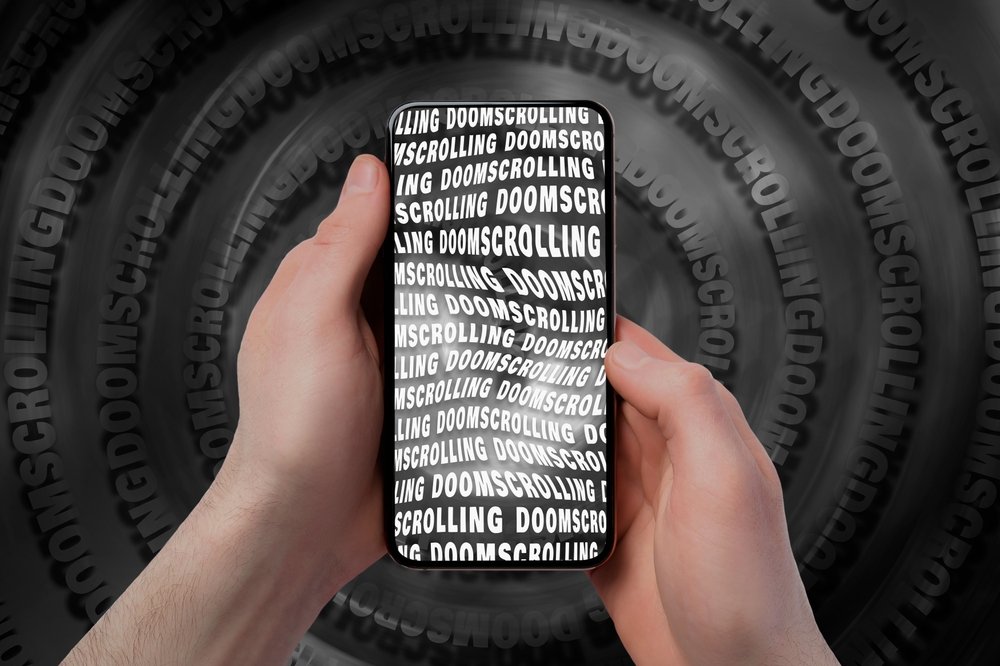
Doomscrolling is a term used by modern behavioral researchers to describe people who are compulsive about taking in pessimistic, alarming, shocking, or dooming content. Once they exhibit a pattern, social media algorithms feed them more of the same, which gives the illusion that the content has more credibility than it should.
Generally, there are two types of people who are compulsive about this type of media:
- People riddled with anxieties. For these individuals, consumption is driven by a subconscious quest for self-preservation. Mistaking vigilance for preparedness, they obsessively monitor bad news in an attempt to anticipate potential catastrophes and maintain an illusion of control. The constant intake only reinforces their hypervigilance, leaving them paralyzed by dread, helplessness, and the false confirmation that total disaster is imminent.
- People with superiority complexes. For this group, consumption is driven by the desire for cognitive vindication and moral dominance. Rather than feeling threatened by alarming news, they view it as tangible proof that their worldview is correct and that opposing institutions, ideologies, or peers are incompetent or corrupt. The content feeds their cynicism and outrage, reinforcing a detached sense of intellectual elitism while validating their belief that they alone see through the chaos.
While doomscrolling is a modern form of the addiction, the habit itself is nothing new. There have always been some who have had an appetite for bad news, rumors of disaster, and end-of-the-world predictions. Long before glowing smartphones, people crowded around village squares to obsess over local tragedies, devoured sensational tabloid headlines, and traded apocalyptic pamphlets.
The impulse hasn’t changed, but the machinery behind it has. Ancient gossip and yellow journalism were limited by time and paper, whereas today’s digital platforms automate the delivery—and more importantly, they monetize it. Every second of anxious staring or righteous outrage gets converted into ad revenue and user engagement. It is an age-old human weakness turned into a profitable business model, built to keep you hooked because your dread and pride pays their bills. Now that people realize they can make money off of doomscrollers, they create content directed at them specifically, content they may only pretend to care about.
King Saul
Long before glowing screens or the term “doomscrolling,” King Saul demonstrated how obsessing over perceived threats destroys a man from the inside out.
Saul reigned for forty years (Acts 13:21), yet he squandered years of that extended rule locked in a single obsession. It started with a passing observation: women singing praises of David’s victories and minimizing his (1 Samuel 18:7–9). Instead of letting it go, Saul fixated on it. Twice, David had the clear opportunity to kill Saul and spared his life instead: first at En-gedi, then in the wilderness of Ziph (1 Samuel 24; 26). Both times, Saul held the physical evidence of David’s loyalty in his hands, wept openly, and confessed his foolishness.
Yet both times, as soon as the confrontation passed, Saul relapsed into his paranoia. Undeniable truth could not break the cycle. Instead of using those years to seek God in genuine repentance, Saul spent them chasing shadows, alienating his family, and neglecting the true state of his soul until his reign ended in ruin.
Today, the trap operates the exact same way. It begins with a normal concern about society: an economic trend, a political dispute, or a cultural shift. But when vigilance becomes obsession, facts no longer matter. Even when reality contradicts the panic, the mind rejects peace, reaches back for the feed, and chooses the poison all over again.
What the Poison of Doomscrolling Does
Whether the underlying fuel is nervous dread or arrogant condescension, the outcome of the consumption remains identical: a warped mind, an agitated spirit, and a heart poisoned against other human beings and God.
Toxins do not stay localized. Once absorbed into daily life, this steady intake methodically dismantles inner stability and destroys real-world relationships from the inside out:
The Death of Peace and Contentment
A steady diet of outrage and crisis makes internal stillness impossible. Contentment cannot survive in a mind constantly agitated by perceived injustices, impending doom, or the supposed idiocy of the culture. The peace that surpasses all understanding (Philippians 4:7) is displaced by a restless, simmering irritability that leaves the soul chronically unsettled.
The Erosion of Faith in God
Consuming a non-stop stream of human wickedness and manufactured panic eventually chokes out genuine reliance on the Lord. The mind becomes convinced that everything is spinning entirely out of control, subtly denying that God remains sovereign over the affairs of men (Daniel 4:35; Psalm 46:1–2). Trust in His providence is traded for a bleak, cynical fatalism or a call to action to fix problems by human means.
The Spread of Toxic Suspicion
Constant exposure to hostility trains the mind to see malice everywhere. Paranoia begins to govern how family, neighbors, and longtime friends are perceived. Routine disagreements or harmless comments get reinterpreted as hidden agendas or active betrayals. Solomon observed that a dishonest man spreads strife and a whisperer separates close friends (Proverbs 16:28); consuming relentless digital slander operates with that exact destructive force, driving wedges between husbands, wives, parents, and children.
Inverting Trust: Loving the Supplier, Spurning the Family
Perhaps the most insidious effect of the poison is how it reorders loyalty. Individuals caught in this cycle begin to pull away from people who genuinely know, love, and care for them, treating loving concern as an attack or foolishness. In their place, they bestow total trust upon anonymous screen personalities, ideological influencers, and comment-section cheerleaders whose only function is to validate their grievance and feed them another dose of hostility. They exchange the hard, fruitful work of real-world love for the hollow camaraderie of a digital mob.
The Cycle That Regenerates Itself
Doomscrolling does not burn itself out; it continually regenerates. When an obsession runs into the truth, the habit survives in one of two ways. Sometimes, like Saul, the mind simply ignores what is obvious. Saul wept over the corner of his robe in David’s hand and admitted David was more righteous than he, yet before long he was back in the wilderness with three thousand men hunting the same man (1 Samuel 24:16–17; 26:1–2). Other times, when one narrative collapses, the feed promptly supplies a new one: a fresh threat, a different villain, another crisis demanding attention. Paul warned of people who, having itching ears, turn away from the truth and wander off into myths (2 Timothy 4:3–4), tossed to and fro by every new wind (Ephesians 4:14). The object of fear or contempt changes, but the appetite never does. As a dog returns to its vomit, so a fool repeats his folly (Proverbs 26:11).
When poison becomes daily bread, health leaves the house. What started as casual scrolling ends up destroying the very relationships God built to anchor us.
Missing the Real Sign: The End Is Near
The ultimate danger of this mental poisoning is not merely personal agitation or broken earthly relationships; it is spiritual blindness to what actually matters.
Online feeds are saturated with breathless exposés and sensational theories. People spend hours captivated by narratives about demographic shifts, shadowy cabals, algorithm-driven cultural panics, or bitter gender wars in the “manosphere.” They argue endlessly about who is secretly pulling the strings, convinced that tracking these digital subcultures makes them uniquely informed.
In reality, it is a masterclass in distraction.
While people obsess over manufactured crises, they remain oblivious to a two-fold reality: history itself is moving toward a definitive, sovereign conclusion, and our individual lifespans are brief, fragile, and utterly uncertain.
Scripture does not direct us toward online conspiracy or cultural panic; it warns that this fallen world is heading for righteous judgment (2 Peter 3:10–13; Revelation 21:1), and it reminds us that our earthly lives are nothing more than a mist that appears for a little while and then vanishes (James 4:14).
We do not know the exact timing of the world’s end—Jesus stated clearly that no one knows that day or hour except the Father (Matthew 24:36). Nor do we know the number of our own days. A sudden medical report, an unexpected accident, or a single heartbeat can instantly end our time on earth long before any hypothetical societal collapse occurs. Yet instead of numbering our days to gain a heart of wisdom (Psalm 90:12) or preparing our souls to meet our Maker, millions waste irreplaceable hours arguing about temporal trivia on glowing screens.
Closing
If you are trapped in this cycle, I pray you are not so far lost that you will ignore this post. I know of people like you. When they tell the good stories from their lives, they are decades old before the poison corrupted everything.
The antidote to the poison is having a close, intimate relationship with God. Allow Him to take the burden of protection and making things come out right because He is the only one powerful and wise enough to make it happen, anyway.
To give Him space to work, you need to break away from your feeds and your notifications. If needed, seek help from a Christian counselor and people that love you who will pray for you and hold you accountable.
I pray you will get yourself ready for eternity. Meet my Jesus. He is awesome.
Other posts that might be helpful on this subject:
- Unlock Biblical Discernment: Stop Believing Lies, Live God’s Truth
- Protecting Your Peace and Freedom From Harmful Thoughts and Feelings
- Words That Have Lost Their Biblical Meaning: Repentance
Scripture references used or considered in the writing of this blog post. All Scripture quoted is in ESV format unless otherwise specified.
- 1 Samuel 18:7–9
- 1 Samuel 20:30–33
- 1 Samuel 24
- 1 Samuel 26
- 1 Samuel 31
- Psalm 1:1–3
- Psalm 46:1–2
- Psalm 46:10
- Psalm 55:22
- Psalm 90:12
- Proverbs 4:23
- Proverbs 16:18
- Proverbs 16:28
- Proverbs 26:11
- Proverbs 26:12
- Daniel 4:35
- Amos 4:12
- Matthew 6:11
- Matthew 6:22–23
- Matthew 6:27
- Matthew 24:3
- Matthew 24:36
- Matthew 25:1–13
- Luke 6:43–45
- Luke 18:9–14
- Acts 13:21
- 2 Corinthians 5:10
- 2 Corinthians 5:20
- 2 Corinthians 10:12
- Galatians 5:22–23
- Ephesians 4:14
- Ephesians 4:31–32
- Philippians 4:7
- Philippians 4:8
- Colossians 3:2
- 1 Timothy 1:5
- 1 Timothy 6:6
- 2 Timothy 4:3–4
- Hebrews 12:28
- James 3:5–6
- James 4:14
- 2 Peter 3:10–13
- Revelation 21:1